Tuesday, January 27

Health

About 2.1 billion people globally lack access to safe drinking water: UN report
Health

About 2.1 billion people globally lack access to safe drinking water: UN report

A whopping 2.1 billion people or one in every four people globally lack access to safely managed drinking water, according to a joint report by UN agencies WHO and the UNICEF on Tuesday. This includes 106 million people who drink directly from untreated surface sources, stated the report, released as part of the World Water Week 2025. Despite progress over the last decade, billions of people around the world still lack access to essential water, sanitation, and hygiene services, putting them at risk of disease and deeper social exclusion. The report noted that 3.4 billion people worldwide lack safely managed sanitation, including 354 million who practice open defecation. Another 1.7 billion people lack basic hygiene services at home, including 611 million without access to any facilitie...
IIT-M develop low-cost chip-based device to rapidly test antibiotic resistance
Health

IIT-M develop low-cost chip-based device to rapidly test antibiotic resistance

Researchers at the Indian Institute of Technology Madras (IIT Madras) have developed an innovative and affordable microfluidic device that can rapidly determine whether bacteria are resistant or susceptible to antibiotics.  Antimicrobial Susceptibility Testing (AST) is an important method used to identify which antibiotics will work against a specific infection. It helps doctors choose the right treatment and avoid the misuse of antibiotics, which is a major cause of AMR. Unlike many modern techniques that rely on costly metals, complex fabrication processes, or require highly skilled technicians, this lab-on-chip device, known as ‘ε-µD’, is based on screen-printed carbon electrodes embedded in a simple microfluidic chip. This approach makes the device not only economical but also suita...
Mumbai doctors give new lease of life to Kolkata youth battling Type-1 Diabetes
Health

Mumbai doctors give new lease of life to Kolkata youth battling Type-1 Diabetes

Doctors at a Mumbai hospital have given a new lease of life to a Kolkata youth who had been battling with Type-1 diabetes since the age of three. Rishi Sharma, a 25-year-old student from Kolkata underwent a successful Simultaneous Pancreas-Kidney (SPK) transplant, which has relieved him from lifelong insulin injections and dialysis.   The complex four-hour surgery was performed by a multidisciplinary team of doctors, led by Dr. Jatin Kothari, senior director, Nephrology & chief consultant, Renal Transplant Medicine, and Dr. Gaurav Chaubal, director, Liver & Multi Organ Transplant at Nanavati Max Super Speciality Hospital in Mumbai.   Rishi had been dependent on multiple insulin injections daily since childhood. Over the years, uncontrolled diabetes led to progressive complications...
Type 1 and Type 2 diabetes affect men and women differently: Study
Health

Type 1 and Type 2 diabetes affect men and women differently: Study

While both Type 1 and Type 2 diabetes raise the risk of heart disease and death, the effect is pronounced differently in men and women, according to a study. Cardiovascular disease (CVD) is the leading cause of death and morbidity worldwide, and individuals with T1D or T2D are at greater risk compared to the general population. Researchers from Uppsala University in Sweden showed that younger men with T2D have worse mortality and CVD outcomes than those with T1D. However, for women of all ages, almost all outcomes are worse for T1D than for T2D. "Women with Type 1 diabetes often develop the disease at a young age, so they live with it longer, which increases their lifetime risk of heart and blood vessel problems. They may also lose some of the natural protection women usually have agai...
Just one hour of scrolling social media reels may cause eye fatigue: Study
Health

Just one hour of scrolling social media reels may cause eye fatigue: Study

Facing digital eye strain? According to a study, just one hour of scrolling social media reels on smartphones can cause eye fatigue. The study published in the Journal of Eye Movement Research found that it is not just the time spent on digital devices but also the type of content being used that can cause the condition. “Social media content causes greater pupil fluctuations than reading or watching a video,” said the researchers from SRM Institute of Science and Technology. The team stated that “prolonged smartphone use, exceeding 20 minutes at a time, can lead to physical and mental health issues, including psychophysiological disorders”. Digital devices and their extended exposure to blue light cause digital eyestrain, sleep disorders, and visual-related problems. To examine the i...
World Psoriasis Month: Dermatologists share a guide on how to manage it better
Health

World Psoriasis Month: Dermatologists share a guide on how to manage it better

"Psoriasis is affecting millions globally, influencing not only skin health but also joints, overall immunity, and mental well-being," says Dr. Prachi B Bodkhe, dermatologist at Envi Aesthetics. "Though a cure can’t be promised, this condition can be effectively managed with medical supervision, lifestyle changes, and awareness of associated conditions," she adds.It is important that patients avoid self-medication. As Bodkhe explains, "Psoriasis management is complex, and treatments that work for one person may be harmful or ineffective for another." Following your care provider’s guidance, undergoing tests when recommended, and adopting a healthy lifestyle can help reduce recurrence and prolong remission. This World Psoriasis Month, dermatologists delve into early signs to watch out for, ...
Study reveals why South Asians face early, more aggressive risk of diabetes
Health

Study reveals why South Asians face early, more aggressive risk of diabetes

Abdominal obesity coupled with greater sedentary behaviour is a driving factor for an early and more aggressive risk of diabetes among South Asians, including Indians, revealed a study on Tuesday.  The study, published in the BMJ, explored the characteristics of type 2 diabetes in South Asians who tend to develop the condition at a younger average age and lower body mass index than the white population. “South Asians face type 2 diabetes earlier and more aggressively than most other populations. Our review shows that diabetes often begins at lower body weight, progresses rapidly, and leads to more complications (kidney disease, heart attacks),” endocrinologist Dr. Anoop Misra, Director of Diabetes Foundation (India), who led the study, told IANS. The study, in collaboration with researc...
Infections due to catheter use in hospitals prevalent across India: AIIMS study
Health

Infections due to catheter use in hospitals prevalent across India: AIIMS study

Bloodstream infections acquired during a hospital stay due to the use of a catheter are prevalent across ICUs in India and are often caused by microbes having a high level of antibiotic resistance, according to a study led by the All India Institute of Medical Sciences, New Delhi. Antibiotic resistance -- in which antibiotic drugs are rendered ineffective because disease-causing microbes have become immune to them -- can extend one`s hospital stay and treatment costs, adding stress to a public healthcare system. Estimates published in The Lancet Global Health journal show that on average, around nine bloodstream infection events occur every 1,000 days that a central line -- a catheter inserted in a patient`s large vein instead of an intravenous line -- was in place in the intensive care ...
Australian scientists grow world’s first living skin with blood supply in lab
Health

Australian scientists grow world’s first living skin with blood supply in lab

In a first, a team of Australian scientists has grown the world`s first fully functioning lab-made human skin with its own blood supply. The advance may pave the way for better treatment of skin diseases, burns, and grafts.  The team from the University of Queensland used stem cells to create a replica of the human skin, which had blood vessels, capillaries, hair follicles, nerves, tissue layers, and immune cells. "This is the most life-like skin model that`s been developed anywhere in the world and will allow us to study diseases and test treatments more accurately," said lead researcher Abbas Shafiee, a tissue engineering and regenerative medicine scientist from UQ`s Frazer Institute. “Until now, scientists have been limited in how we study skin diseases and develop new therapies. “B...
Extreme heat affecting health, productivity of workers worldwide: UN report
Health

Extreme heat affecting health, productivity of workers worldwide: UN report

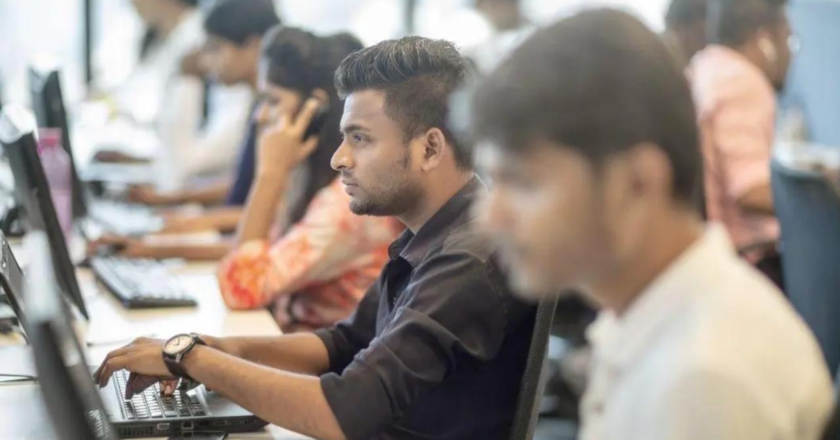
The productivity of workers in extreme heat drops by two to three per cent for every degree above an ambient temperature of 20 degrees Celsius, highlights a report brought out by the United Nations` health and climate agencies. Analysing evidence from studies from past five decades that "have provided conclusive evidence that workplace heat stress directly threatens workers` ability to live healthy and productive lives", the World Health Organization (WHO) and World Meteorological Organization (WMO) have also outlined guidance on how the growing risks of heat can be mitigated in the section of society. Extreme heat events around the world occur more often and have become intense, increasing risks for both outdoor and indoor workers, authors of the report say, adding that related health r...