
For Dhivaji Dhurat, a 52-year-old resident of Malad, life had slowly begun to shrink. Simple tasks that once seemed effortless walking short distances, climbing a flight of stairs or carrying groceries started triggering chest pain and breathlessness. Having undergone a heart angioplasty 15 years ago, he feared that something was seriously wrong again.
The discomfort became more frequent over the weeks, forcing him to seek medical attention and doctors discovered something alarming. The heart stent that had kept one of his coronary arteries open for the last 15 years had become severely blocked once again, a condition known as in-stent restenosis. To make matters more challenging, two additional critical blockages were also detected in his coronary arteries.
Treating such a case was far from straightforward.
When the team attempted conventional angioplasty, they found that the blockage was so dense and resistant that routine balloons and catheters could not effectively open the narrowed artery. It was a situation where standard treatment options alone were unlikely to deliver the desired result.
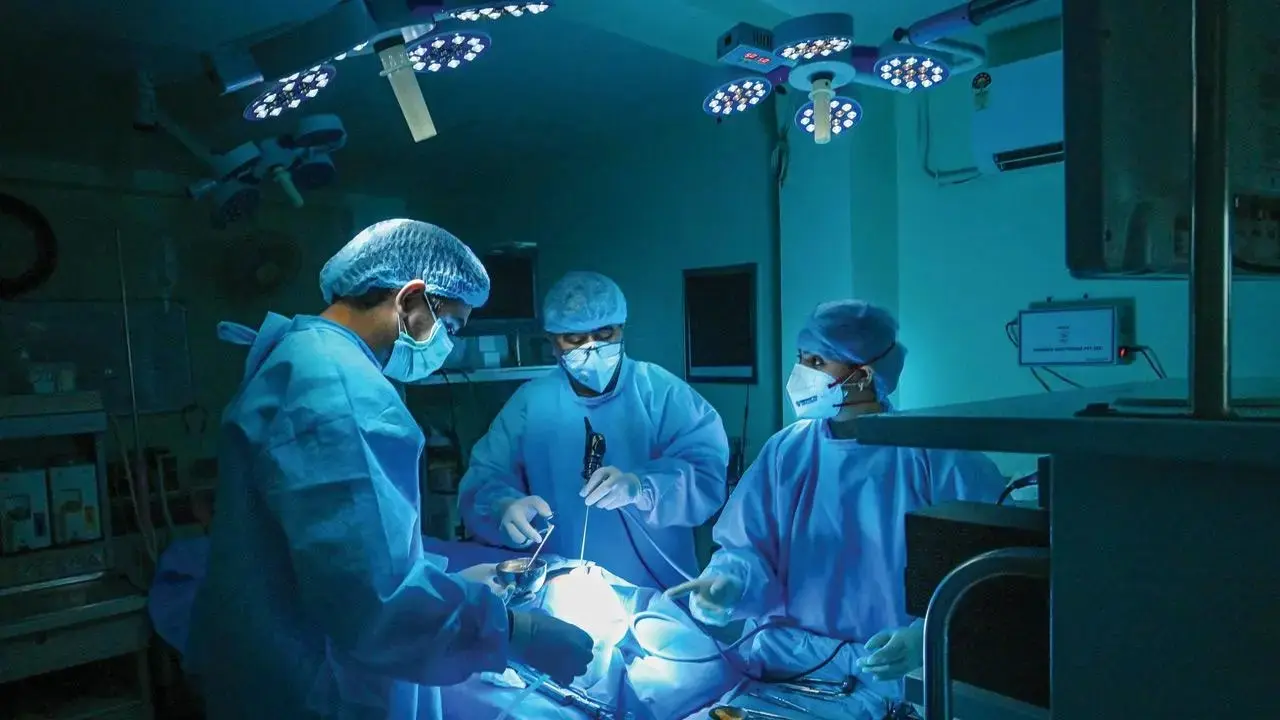
Faced with this challenge, the Cardiac Sciences team at KIMS Hospitals, Thane, decided to perform what they claim to be Mumbai suburbs’ first Coronary Excimer Laser Angioplasty, an advanced procedure that uses ultraviolet laser energy to precisely vaporise scar tissue, resistant plaque and organised thrombus inside the artery before completing angioplasty.
The landmark procedure was successfully performed by Dr B. C. Kalmath, director & head, Department of Cardiac Sciences at the hospital, restoring blood flow not only through the previously blocked stent but also treating the patient’s two additional coronary blockages during the same sitting.
Within hours of the procedure, Dhurat was comfortable, and the very next day, he was ready to return home a recovery that would have been difficult to imagine just 24 hours earlier.
Speaking about the case, Dr Kalmath said, “Mr. Dhurat’s case represented one of the most challenging scenarios we encounter in interventional cardiology. A 15-year-old stent had developed severe in-stent restenosis, and conventional balloons were unable to adequately prepare the lesion. Coronary Excimer Laser Angioplasty allowed us to precisely modify the scar tissue, restore the artery and safely complete the procedure. We were also able to successfully treat two additional coronary blockages during the same intervention. Seeing the patient recover well and return home the very next day was immensely satisfying for the entire team.”
Unlike conventional angioplasty, which primarily relies on balloons and stents to widen narrowed arteries, Coronary Excimer Laser Angioplasty is designed for highly complex coronary lesions. It is especially useful in patients with severe in-stent restenosis, heavily calcified arteries and long-standing thrombotic blockages where conventional techniques may not be sufficient. The laser emits controlled ultraviolet pulses that break down resistant tissue into microscopic particles, enabling safer and more effective treatment of difficult coronary blockages.
For patients, this can mean the difference between a technically difficult procedure and a successful outcome.
Highlighting the significance of the achievement, Dr. Kalmath added, “The introduction of Mumbai Suburbs’ first Coronary Excimer Laser Angioplasty marks a significant advancement for patients with complex coronary artery disease. Until now, many patients requiring this highly specialised technology had to travel to tertiary centres outside the region. Having this capability available closer to home allows us to offer advanced treatment without unnecessary delays and improve access to cutting-edge cardiac care for patients who need it the most.”
Coronary artery disease remains one of the leading causes of death in India, and while conventional angioplasty continues to be highly effective for most patients, complex cases such as old re-blocked stents often require specialised technologies to achieve durable results. Experts stress that people who have undergone angioplasty in the past should not ignore recurring chest pain, breathlessness or reduced exercise tolerance, even if their original procedure was performed many years ago. Early evaluation can help detect re-blockage before it leads to a heart attack.