

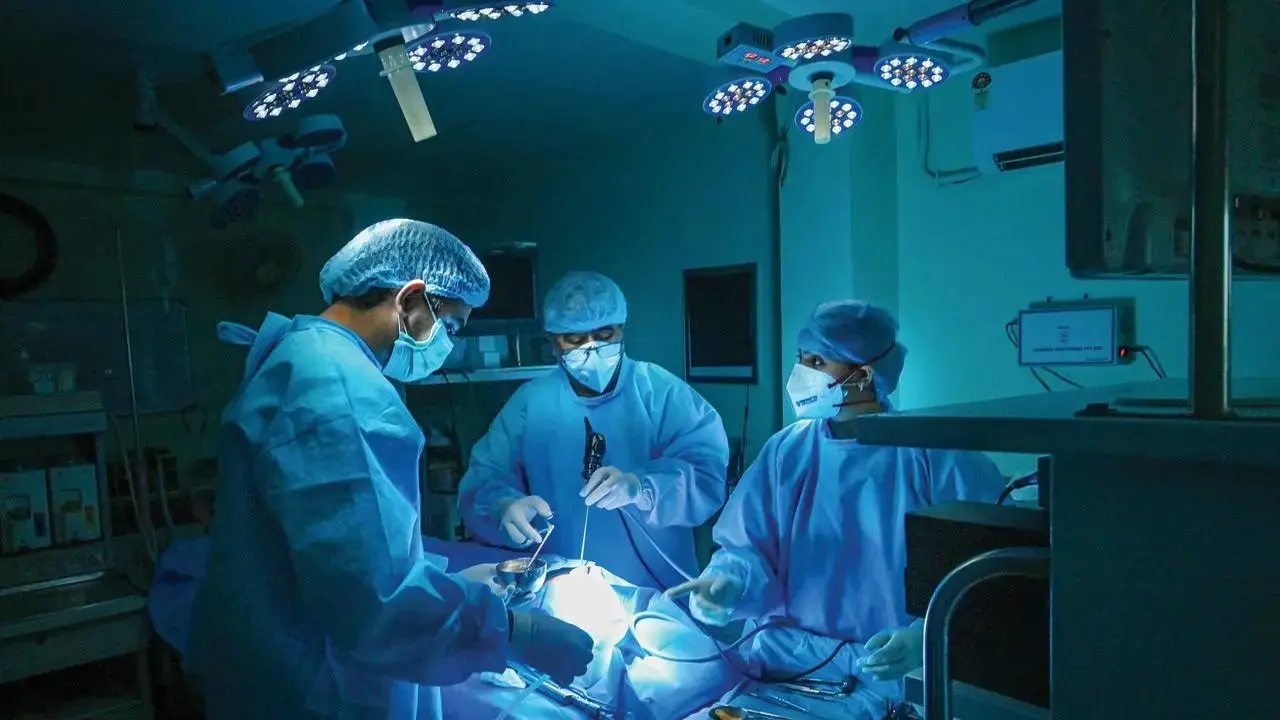
A 52-year-old woman’s worsening breathlessness turned out to be a complex and potentially life-threatening heart condition but doctors in Thane gave her a new lease of life in time. Her condition meant a failing artificial valve, a large clot inside the heart, severe pulmonary hypertension, and disease affecting multiple heart valves.
She was successfully treated through a rare and highly complex cardiac operation known as the Commando procedure, helping her regain her quality of life.
The woman had undergone mitral valve replacement in 2020. Over time, she developed increasing shortness of breath that began affecting her daily activities. She consulted Dr. B.C. Kalmath, Director of Cardiac Sciences, KIMS Hospitals, Thane, for her worsening symptoms and was treated by the Department of Cardiac Sciences at the hospital. Detailed investigations revealed severe narrowing of her previously implanted mitral valve, a large clot in the left atrium, disease of the aortic valve, leakage of the tricuspid valve, severe pulmonary hypertension, and an extremely small aortic root, necessitating a highly complex redo surgery.
“This was an exceptionally high-risk case because multiple cardiac problems had developed simultaneously. The patient had a failing prosthetic mitral valve, a large clot within the heart, severe pulmonary hypertension, and involvement of multiple valves, all in the setting of a previous heart surgery. Careful planning, multidisciplinary expertise, and timely intervention were critical to achieving a successful outcome. Cases like these highlight the importance of early evaluation when symptoms such as breathlessness begin to worsen,” said Dr. B.C. Kalmath.
The surgery was led by Dr Saumya Sekhar, consultant – Cardiothoracic & Vascular Surgeon, in association with Dr Leena Tayshete, Cardiac Anaesthetist at the hospital.
“Redo heart surgeries are among the most demanding procedures we perform. In this case, the challenge was amplified by the patient’s previous surgery, severe pulmonary hypertension, the large clot within the heart, and extremely restricted space available for valve replacement,” said Dr Sekhar.
Following careful re-entry into the chest, the surgical team determined that a conventional valve replacement would not provide adequate access to safely address the patient’s complex anatomy. The team therefore proceeded with a Commando procedure, one of the most technically demanding operations in cardiac surgery, reserved for highly selected cases.
The surgery involved reconstructing the heart’s central fibrous structure that connects the aortic and mitral valves, allowing surgeons to implant appropriately sized replacement valves despite the patient’s difficult anatomy. The diseased mitral and aortic valves were replaced with mechanical prosthetic valves, while the leaking tricuspid valve was repaired during the same operation.
“We were not just replacing damaged valves. We had to reconstruct the heart’s central supporting framework before new valves could be implanted safely. Procedures of this complexity are rarely required, but they can be lifesaving when conventional surgery is not enough,” explained Dr aSekhar.
One of the most encouraging moments during the operation came when the heart resumed a normal rhythm on its own after blood flow was restored. The patient was subsequently weaned off the heart-lung machine with minimal medication support.
Her recovery was smooth. She was taken off ventilator support on the first day after surgery, started walking on the fourth postoperative day, and was discharged home on the eighth day. A follow-up echocardiogram showed excellent function of both newly implanted valves, with smooth blood flow and no leakage around the prosthetic valves.
“The Commando procedure is among the most technically demanding operations in cardiac surgery and is performed only in selected patients where conventional valve replacement is not sufficient. Given the complexity of this redo surgery and the patient’s multiple risk factors, achieving such a positive recovery is extremely rewarding for the entire team,” said Dr Sekhar.
The successful outcome highlights how advanced reconstructive cardiac techniques can offer hope even in some of the most challenging redo heart surgeries, providing patients with complex valve disease a chance at long-term recovery and improved quality of life.