
WINNIPEG – The head of the Canadian Museum for Human Rights says it’s unfortunate a trustee resigned over an exhibit about displaced Palestinians but she stands by the decision for it to open to the public Saturday.

The exhibit, titled “Palestine Uprooted: Nakba Past and Present,” focuses on people affected by the Nakba, Arabic for catastrophe. About 750,000 Palestinians were forcibly displaced in 1948 during fighting over control of what is now Israel.
The exhibit has been in the works for four years, though Palestinian Canadians have been calling for their stories to be told at the Winnipeg museum since it opened in 2014.
Jewish groups have raised concerns that the exhibit could fuel antisemitism by not providing more historical context and that it was created without sufficient consultation and transparency.
Dozens of people rallied outside the museum late Friday afternoon in protest of the exhibit. They carried signs reading “Don’t erase Jewish experience” and “Facts not feelings.”
Earlier this week, board member Mark Berlin submitted his resignation, accusing the museum of putting forth ideology instead of an accurate history.
“It’s unfortunate that (Berlin) chose to resign based on his opinions about this exhibit and what he knew of it,” Isha Khan, the museum’s chief executive officer, said Friday.
Related Videos
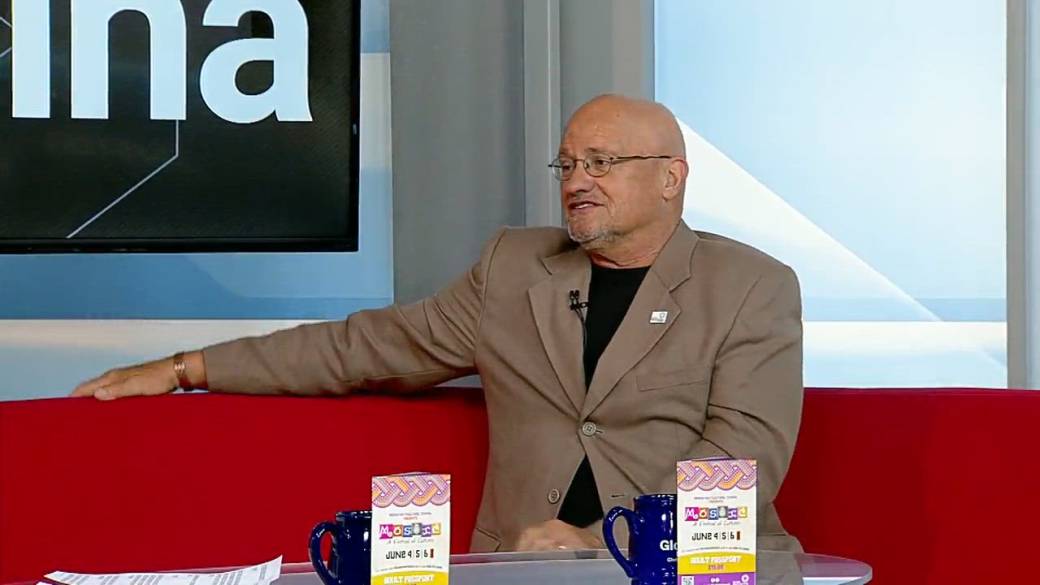
“Board governance is intended to manage different opinions and make decisions that are from the best interests of this museum and to ensure that we deliver our mandate. I believe that’s what our board has done — supported this museum to do the work to deliver our mandate.”
Get daily National news
Get daily Canada news delivered to your inbox so you’ll never miss the day’s top stories.
Berlin, who hadn’t seen the exhibit before resigning, said it didn’t acknowledge the estimated 850,000 Jewish people who were forced to flee Arab countries in the years following the establishment of Israel.
He said presenting the Palestinian displacement of 1948 without proper historical and political context can deepen the distrust and animosity that exist between Jews and Muslims in Canada.
Khan said stories of Palestinian Canadians have been underrepresented in the museum’s galleries.
She said she has heard criticism from people and groups who haven’t yet seen the Nakba exhibit and challenged them to view it with compassion and empathy.
“Sharing the experiences of one community doesn’t diminish or negate the experience of another.”
Khan said the museum has committed to telling stories about Jewish displacement in the future. And she encouraged those critical of the exhibit to step into the space first.
“Then we can have some constructive discussion about what it is and what their concerns might be. To this point, many of those concerns were based on what it could be and fear.”
The museum invited media to view the exhibit Friday.
Taking up about 12 metres of an existing gallery, it includes video testimonies, photographs, art and writings. Property deeds, house keys and deep red embroidered clothing are also among featured artifacts.
A timeline references displacements on both sides: “Before, during and after the war, hundreds of thousands of people became refugees. These included Palestinian Arabs as well as Jews from surrounding countries.”
Short videos on a small screen share first-hand accounts of Palestinian Canadians displaced in 1948.
Isabelle Masson, curator of the exhibit, spoke with about 10 Palestinian Canadians in Winnipeg and Montreal for the project.
She said their stories helped the team understand the historical impacts of displacement and highlighted the hope of Palestinians.
“The exhibition holds stories about this intergenerational trauma, about loss and uprooting, but also stories about beauty, cultural practice and art.”
Fouad Sahyoun was four when his family was displaced from Haifa in what is now known as Israel. He settled in Canada in 1990.
Portions of an interview with the 82-year-old are featured. He talks about how his grandfather’s properties were seized, along with the family’s cars, bank accounts and furniture.
In an interview with The Canadian Press, he said he dreams of one day returning to Haifa as a Palestinian citizen.
“We live under trauma, and that trauma will only end when we’re allowed to go back as decent people, as human people, in our homes and properties.”
Sahyoun hopes the exhibit educates others to “know our story, know what we went through.”
This report by The Canadian Press was first published June 26, 2026.
© 2026 The Canadian Press