

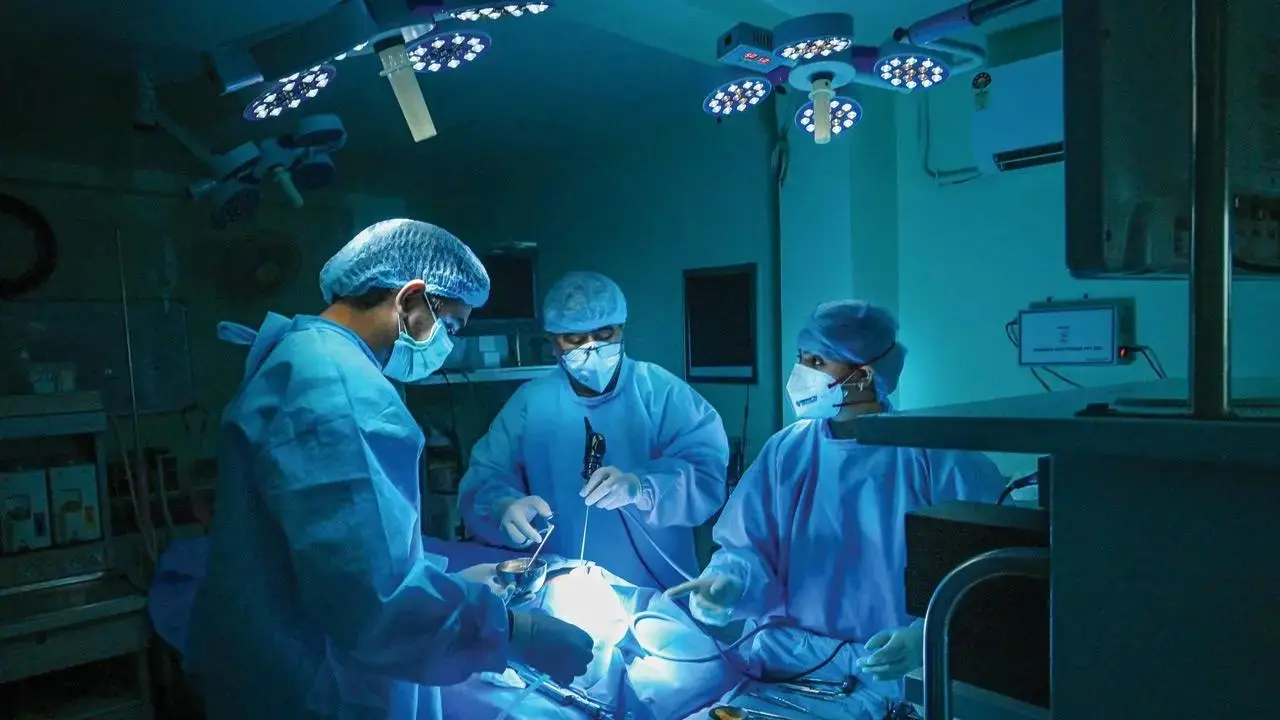
Doctors at a Mumbai hospital have successfully performed a rare surgery for a 75-year-old man, diagnosed with a large rectal polyp that was later confirmed to contain early-stage rectal cancer.
The advanced robotic procedure called Robotic Trans-Anal Minimally Invasive Surgery (TAMIS) enabled complete removal of the cancerous growth without the need for major abdominal surgery, removal of the rectum, or a permanent stoma, offering the patient a quicker recovery and improved quality of life.
The man initially presented with bleeding in the stools and was subsequently diagnosed with a large rectal polyp measuring approximately 4–5 cm in diameter during a colonoscopy. While the biopsy suggested an adenoma, a pre-cancerous lesion, the size and nature of the growth raised concerns about the possibility of an underlying cancer within the polyp.
Further investigations, including an MRI, showed no evidence of disease spreading outside the rectum. An Endoscopic Ultrasound performed by Dr Samit Jain, consultant Gastroenterology at Jaslok Hospital & Research Centre revealed superficial invasion into the rectal wall, indicating the presence of early-stage cancer while confirming that the disease remained localised.
Conventionally, patients with such lesions often require major abdominal surgery involving the removal of part or all of the rectum. In several cases, this can result in the need for a stoma — a surgically created opening in the abdomen that allows waste to be collected externally in a bag. However, considering the patient`s advanced age, frailty, and multiple comorbidities, including diabetes, heart disease, and liver disease, traditional surgery posed significant risks.
After careful evaluation, the doctors at the hospital opted for the unique approach using the Da Vinci Surgical Robot. The procedure enabled surgeons to remove the entire lesion through the natural anal opening, eliminating the need for abdominal incisions while preserving normal bowel function.
The robotic platform provided enhanced visualisation, magnification, and surgical precision, allowing complete full-thickness removal of the tumour with clear margins. The man experienced an uneventful recovery, was discharged within two days, and resumed normal activities shortly thereafter.
The final pathology report confirmed the presence of early-stage rectal cancer within the polyp. Importantly, all margins were clear, indicating complete removal of the disease. More than eight months after surgery, the man remains cancer-free with no evidence of recurrence and continues to undergo regular follow-up assessments.
The surgery was led by Dr. Chintamani Godbole, consultant GI Surgery & Robotic Colorectal Surgery and supported by Dr. Parnasha, junior consultant.
Dr Godbole said, “Robotic TAMIS represents a significant advancement in the treatment of selected rectal cancers and complex rectal polyps. In elderly and medically fragile patients, conventional surgery can carry substantial risks and may significantly impact quality of life. The robotic platform provides superior precision and visualization, allowing us to achieve complete tumour removal while preserving organ function and avoiding major surgery. This case highlights how advanced technology can help deliver effective cancer treatment with faster recovery and better patient outcomes.”
The man gratefully mentioned, “When I was told that I had a large growth in my rectum and might require major surgery, I was extremely worried. At my age, and with existing health conditions like diabetes and heart disease, the thought of undergoing a major operation was frightening. The doctors at the hospital explained the robotic procedure to me and reassured me throughout the process. To my surprise, the surgery was much smoother than I had imagined, and my recovery was remarkably quick. Within a short period, I was back to my normal routine. I am grateful to the entire medical team for giving me a treatment option that was both effective and less physically demanding.”
Jitendra Haryan, CEO of the hospital concluded, “Cases like these remind us why innovation in healthcare matters. Seeing an elderly patient overcome cancer through a minimally invasive approach and return to his normal life is incredibly rewarding.”