
I’ve written before about various software tricks to nudge a smartphone toward dumb-phone territory: stripping the home screen down to essentials, enabling greyscale mode, scheduling downtime windows. I tried all of it, and for a time it worked for me, but only in the way that hiding a bag of chips in a high cabinet works—technically an obstacle, but not really a barrier. One tap to “Ignore Limit,” and I’m back to scrolling.
The problem is that the key to unlock everything is right there in your pocket. Turns out I needed a small device called Brick to physically restrain me create a physical barrier, and I can feel my screen time habits finally change for the better.
How Brick works with your smartphone
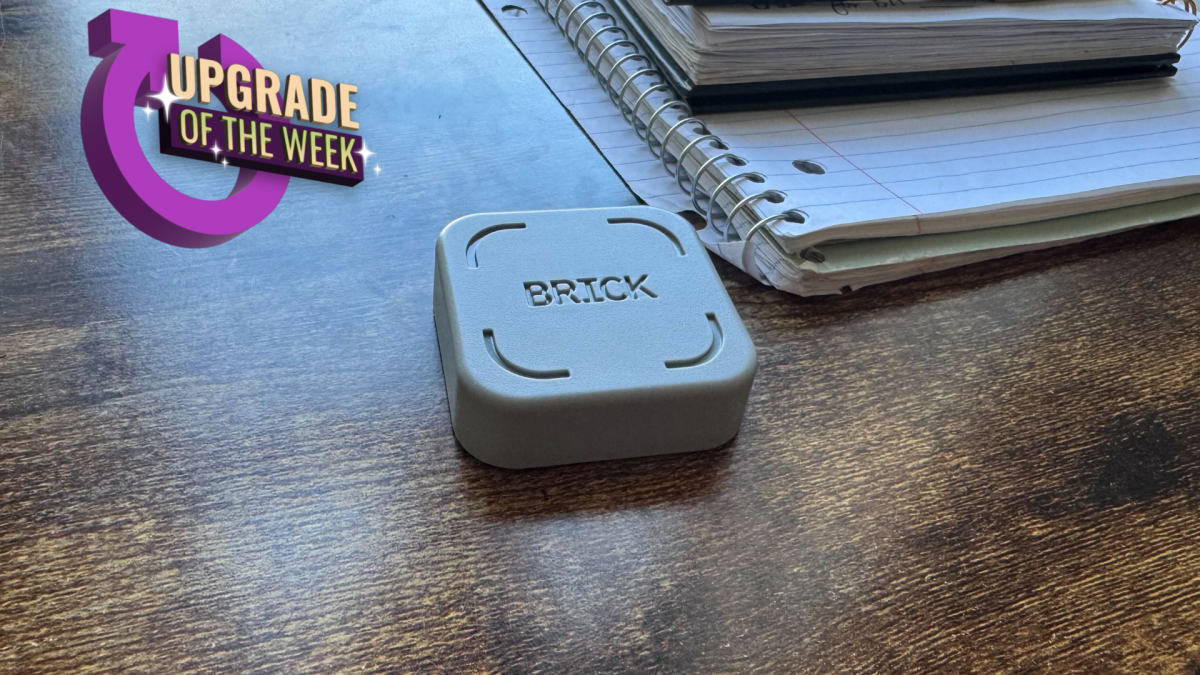
Brick is a small NFC fob—roughly the size of an AirPods case—paired with an app. You open the app, pick which apps or sites to block (or flip it around: choose only the apps you want to keep, and everything else gets blocked), name it something like Work or Family Time (or just Sanity), and tap your phone to the Brick to activate it.
That’s it. And to get everything back, you have to physically walk to wherever you left the Brick and tap again. Each Brick comes with five emergency unbricks you can trigger from the app. I appreciate that those exist, and luckily, I haven’t had to use them yet.
Why Brick actually helps you reduce your screen time
Here’s the thing I keep coming back to: Every digital-based solution asks you to rely on yourself in the exact moment you’re weakest. By the time you’re faced with the “Ignore Limit” option, you’ve already picked up your phone. You’re already mid-habit.
What do you think so far?
Brick changes the physicality of the problem. I’ve found that the greatest service Brick provides is that it doesn’t ask you to resist temptation in the moment; instead, it forces you to set an intention earlier, then it makes that intention stick through physical separation rather than willpower. The research on behavior change says this is exactly the right approach. Environment design beats in-the-moment resolve almost every time. (I just apparently needed a $59 piece of hardware to finally internalize that).
I do have to be honest about how ridiculous this is for me: I spent a lot of money on my phone. And I have now spent additional money ($59) specifically to stop using it. Oh well! That’s where my screen time had brought me. On the bright side, Brick is a one-time purchase with no need for a subscription or “premium plan.” I’ll admit I hesitated to make any purchase, given the irony of the situation and my desire to simply have more willpower. But I’ve realized my time and attention span is worth the cost, and I’m annoyed it took me this long to act on it.