
Full House star Dave Coulier shared a health update about his physical changes and his cancer treatment following “extensive radiation.”

“I haven’t posted in quite a while, and the last time I did, some of you said that I look differently and I sound differently — and I do. What you’re seeing is the side effects of extensive radiation that I went through for carcinoma in my throat,” Coulier said in an Instagram video shared on Thursday.
“I haven’t been able to eat solid food in months and so I’ve lost 45 pounds. That’s what you’re seeing, and it’s affected my ability to speak,” he shared.

“Some of you said that I sound differently, so, yeah, you’re right on with what you’re seeing and what you’re hearing. But just a recap: a year-and-a-half ago, I had non-Hodgkin’s lymphoma and I went through chemotherapy. My hair is kind of growing back,” the 66-year-old actor said.
Coulier also said that he got his PET [Positron emission tomography] scans back and “the prognosis looks good for both the carcinoma in my throat and the lymphoma.”
A PET scan uses “a radioactive drug called a tracer to show both typical and atypical metabolic activity and can often detect diseases before the disease shows up on other imaging tests,” according to the Mayo Clinic.

Get daily National news
Get daily Canada news delivered to your inbox so you’ll never miss the day’s top stories.
Coulier, who portrayed Uncle Joey on Full House for eight seasons, said that he’s “very pleased” with his progress and that he has remained busy in other areas of his life.
“I’ve been creating artwork, and I’ve been doing some creative writing. And I’ve been working on AwearMarket.com, our non-toxic store, and so be on the lookout in the next couple of weeks, we’ll be having some really nice, creative content. We’re looking out for your health and so I wish good health to all of you,” his video concluded.
Back in December, Coulier first revealed that he’d been diagnosed with tongue cancer, less than a year after treatment was successful against his non-Hodgkin lymphoma.
Coulier shared the health update during an interview on Dec. 2 on Today, calling the news a “shock to the system.”
“To go through chemotherapy and feel that relief of, ‘Whoa, it’s gone.’ And then to get a test that says, ‘Well, now you’ve got another kind of cancer’ … it is a shock to the system,” he said, before explaining that he was diagnosed with HPV-related oropharyngeal tongue cancer in October.
Coulier had shared that he was cancer-free following his battle with Stage 3 non-Hodgkin lymphoma, just six months before he received the new diagnosis.
He noted that he had not exhibited any symptoms or signs before the discovery during a follow-up scan.
“A couple of months ago, I had a PET scan, and something flared on the scan,” Coulier recalled. “The doctor said, ‘We don’t know what it is, but there’s something at the base of your tongue.’”
He said that his doctor had performed a biopsy. “It was very painful. It’s like if you bit your tongue, but the pain just lasted every single day,” he said.
Coulier shared that the initial biopsy didn’t show any signs of cancer.
“We thought, ‘This is great. We’re still not sure what it is, but there aren’t any cancer cells,’” he explained.
At his next scheduled PET scan in October, Coulier said that his doctors noticed the growth on his tongue had flared again and grown in size.
He said that he went to an ear, nose and throat oncologist for more testing. After a CT scan and an MRI, doctors performed another biopsy to remove a larger piece of his tongue.
Once the biopsy results came back positive for cancerous cells, Coulier was diagnosed with early-stage P16 carcinoma, or oropharyngeal tongue cancer, which starts in a part of the throat known as the oropharynx.
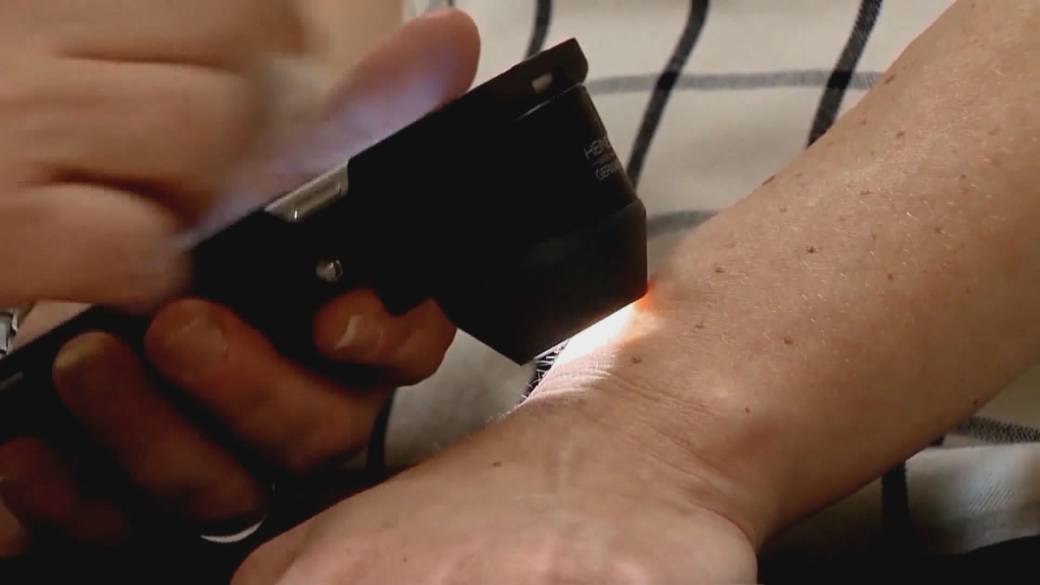
A cancerous tumour is a group of cancer cells that can grow into and destroy nearby tissue, according to the Canadian Cancer Society. It can also spread to other parts of the body.
P16 is a protein that’s a marker for HPV, or human papillomavirus. A P16-positive cancer is caused by infection with HPV-16, a type of high-risk HPV, according to the American Cancer Society.
“They said it’s totally unrelated to my non-Hodgkin’s lymphoma. This is a new cancer. … I said, ‘Are you kidding me?’” Coulier recalled.
Oral cancer starts in the cells of the mouth and is the most common type of squamous cell carcinoma, according to the Canadian Cancer Society.
Symptoms of oral cancer include an ulcer or sore in the mouth or on the lip that doesn’t heal and pain that doesn’t go away, the organization says.
© 2026 Global News, a division of Corus Entertainment Inc.