
Nearly two decades after the Nithari killings first came to light, the Supreme Court, on November 11, acquitted Surinder Koli in the final of the 13 cases against him. In its judgment, the SC noted the investigation lapses and failure to establish guilt beyond reasonable doubt. Close on the heels of the judgment, Discovery+ dropped the documentary, Nithari: Truth, Lies & Murder.
Talking to mid-day, filmmaker Deepak Chaturvedi says the apex court’s verdict reinforces the concerns he had, as he re-examined the case that grabbed the nation’s attention in December 2006 when the bodies of 19 women and children were found near bungalow D5 of Sector 31 in Noida, Uttar Pradesh. While the bungalow’s owner Moninder Singh Pandher and his house-help Koli were arrested in December 2006, the former was acquitted in 2023.
Surinder Koli
As Chaturvedi began his research on the case in 2017, one of the first things he read was Koli’s confession statement. According to reports, it included admissions of cannibalism and necrophilia. “It’s about an hour-and-a-half long and very disturbing to read. But beyond the lines, it’s also about [finding] what’s missing in the document,” he says. The SC accepted Koli’s claim that the confession had been extracted under pressure.
As the filmmaker and his 15-member team delved deeper into the case, the gaps in the investigation began to show. Chaturvedi says that the three-part documentary shows how the Noida police was stretched thin. “Lack of resources, understaffing, being overworked, media attention, and [national] outrage — it was a perfect storm. I don’t think the cops had the tools to handle it. They had ignored the story for a long time and not done due diligence. There wasn’t even a proper way of documenting missing children complaints. People [from the Nithari area] didn’t know when to file an FIR, and what amounts to kidnapping.”
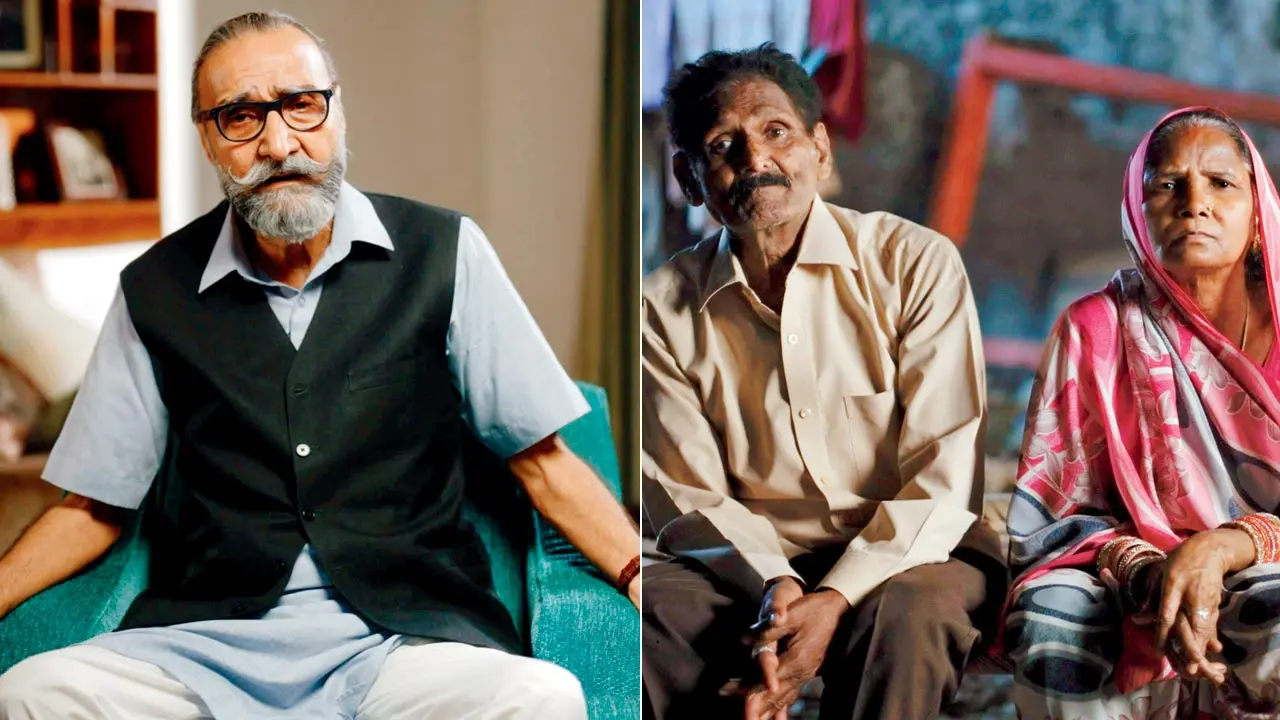
Deepak Chaturvedi
Although the case has been covered extensively over the past 19 years, Chaturvedi asserts key details have been left untouched. He spotlights them in the documentary. It also includes an interview with co-accused Pandher. “There are telling details that have never been looked at. For instance, the world thinks that the excavation started on the morning of December 29, 2006. But no one knows what happened the night before that led to the digging. [Secondly] what was shown as evidence, the belongings of a victim, didn’t belong to said victim! Thirdly, Surinder Koli and Pandher were on a watchlist for seven months before December 2006, but nothing incriminating was found in those months by the police. All I’m saying is that there is a reason why there has been an acquittal. A deeper look at the system is required.”
Does he agree with the SC judgment? Chaturvedi says, “We’re not aligning with the SC judgment, but [highlighting] the lapses in the case. The documentary and the judgment ask the same questions. My personal view is that a lot more needed to be looked at, with a larger lens, not just through the lens of the investigation. It’s probably too late now for a much broader scope.”
A still from the documentary ‘Nithari: Truth, Lies & Murder’
The verdict has come as a blow to the victims’ parents. In its judgment, the SC acknowledged the “immeasurable suffering” of these families. The director reveals that he interviewed 12 families for the docu. “We spent a lot of time with the accused, but also with the victims’ families. In this case, there are two sides — the defendant’s version and the investigations of those on the victims’ side. There are four or five versions of the same thing. Investigating each version meant meeting these people, getting them to share [their account], and then trying to corroborate it. I met the Pandher family. I didn’t meet Koli; we were in touch with his counsel.”
Nov 11, 2025
When the prime accused Surinder Koli was acquitted by the Supreme Court
12
Families of victims interviewed for the documentary