Friday, July 17

Health

"Even cannabis can cause strokes": Top neurologist Dr (Col) Joy Dev Mukherji
Health

"Even cannabis can cause strokes": Top neurologist Dr (Col) Joy Dev Mukherji

Dr (Col) Joy Dev Mukherji, one of India`s leading neurologists, has issued a stark warning against the growing social acceptance of recreational and "party" drugs, stressing that even cannabis can trigger strokes, seizures and cardiac complications and that the practise is driving a worrying rise in young patients arriving with severe neurological emergencies. Speaking in an ANI podcast, Dr Mukherji, who has over 28 years of clinical experience and served in the Armed Forces Medical Services before joining Max Healthcare in 2006, said there is "absolutely no justification" for drug use. He described its growing social acceptance as "deeply alarming." "No way can we justify using drugs. Unfortunately, it has become so rampant that it is getting social acceptance, which is incorrect and ab...
WHO calls for early action to tackle antimicrobial resistance
Health

WHO calls for early action to tackle antimicrobial resistance

Early action against the rising antimicrobial resistance (AMR) is needed to ensure infections remain treatable, and surgeries stay safe, said the World Health Organization (WHO), during the World AMR Awareness Week, on Friday.  The WHO urged countries, specifically in the South-East Asia, to “Act Now: Protect Our Present, Secure Our Future.” “AMR threatens the very foundations of modern medicine, jeopardising decades of medical progress, as around the world -- and particularly in South-East Asia -- common infections are becoming harder to treat,” said Dr Catharina Boehme, Officer-in-Charge, WHO South-East Asia. “It is already claiming lives, undermining essential treatments, and placing enormous strain on health systems. Antimicrobial resistance is already resulting in over a million de...
Mumbai girls draft city’s first Charter of Menstrual Rights
Health

Mumbai girls draft city’s first Charter of Menstrual Rights

A group of adolescent girls from underserved communities in Mumbai has drafted what is being called the city’s first Charter of Menstrual Rights. The document was drawn up during a youth roundtable held to mark Child Rights Week and centred the lived experiences of girls who face stigma, discomfort, and lack of access during menstruation. Hosted by menstrual health initiative Ujaas, the event took place at the Aditya Birla World Academy, on November 19 and brought together girls aged 14 to 19 from five grassroots organisations — Vacha, CHIP, PUKAR, OSCAR Foundation and CORO — who shared personal accounts of their first periods. Fear, shame, misinformation and social restrictions were recurring themes. Despite progress in policy and awareness in recent years, participants said their realit...
Pune doctors give hope to couple trying to conceive a baby for four years
Health

Pune doctors give hope to couple trying to conceive a baby for four years

Conceiving a baby is beautiful process but often there are challenges that can be experienced by the couple. Infertility affects a significant number of couples in India, yet awareness remains limited, particularly around male reproductive health. Investigations often focus on women, even though male factors contribute to 50 per cent of infertility cases, according to the Indian Council of Medical Research. Social hesitation, stigma, and delayed evaluation frequently prevent timely diagnosis, leaving a critical gap in understanding a couple’s full fertility profile. A recent case highlights why early male evaluation is crucial. A couple from Pune, a 36-year-old husband and a 34-year-old wife, married for five years and trying to conceive for four, had undergone routine fertility assessmen...
US CDC does a U-turn on autism-vaccine link, Indian doctors reject claims
Health

US CDC does a U-turn on autism-vaccine link, Indian doctors reject claims

The US Centers for Disease Control and Prevention (US CDC), the national public health agency of America, has quietly taken up an anti-vaccine stand, hinting at the association between vaccines and autism. However, experts in India on Friday, November 21, have thwarted the claims.  Once a key opponent of growing global anti-vaccine sentiment, the change in CDC reflects an anti-vaccine stance by Health and Human Services Secretary Robert F. Kennedy Jr., which is also endorsed by President Donald Trump. “The claim ‘vaccines do not cause autism’ is not an evidence-based claim because studies have not ruled out the possibility that infant vaccines cause autism,” read the US CDC website. The updated page also says studies supporting a link “have been ignored by health authorities” and mentio...
India launches 1st indigenous CRISPR-based gene therapy for Sickle Cell Disease
Health

India launches 1st indigenous CRISPR-based gene therapy for Sickle Cell Disease

Setting a new milestone, the Indian government on November 20 launched an indigenous CRISPR-based gene therapy for Sickle Cell Disease, which particularly affects India`s tribal population.  The low-cost gene editing solution named "BIRSA 101", in honour of Bhagwan Birsa Munda, remembered as a great tribal freedom fighter, was launched by Union Minister of State (Independent Charge) for Science and Technology Dr Jitendra Singh. The technology works like a “precise genetic surgery”, capable not only of curing Sickle Cell Disease but also transforming treatment pathways for several hereditary disorders, the minister explained. Sickle Cell Disease is a chronic, single-gene disorder that causes a debilitating systemic syndrome characterised by chronic anaemia, acute painful episodes, organ ...
India has made significant progress in reducing poverty: UNICEF
Health

India has made significant progress in reducing poverty: UNICEF

India has made significant progress in reducing poverty, and the country’s flagship programmes have supported investments in children, according to the UNICEF on Thursday.  The UN agency’s flagship report, The State of the World`s Children 2025, showed that more than 1 in 5 children in low- and middle-income countries, about 400 million globally, are deprived of at least two areas critical for their health, development, and wellbeing.  Globally, millions of children still lack access to basic services such as education, clean water, safe sanitation, housing, health, and nutrition, which deepens inequality, slows growth, and weakens the social fabric that leaves a lifelong impact even across generations.  “India has made significant progress in poverty reduction, and the flagship program...
Delhi doctors urge pregnant women to follow smart protection amid rising smog
Health

Delhi doctors urge pregnant women to follow smart protection amid rising smog

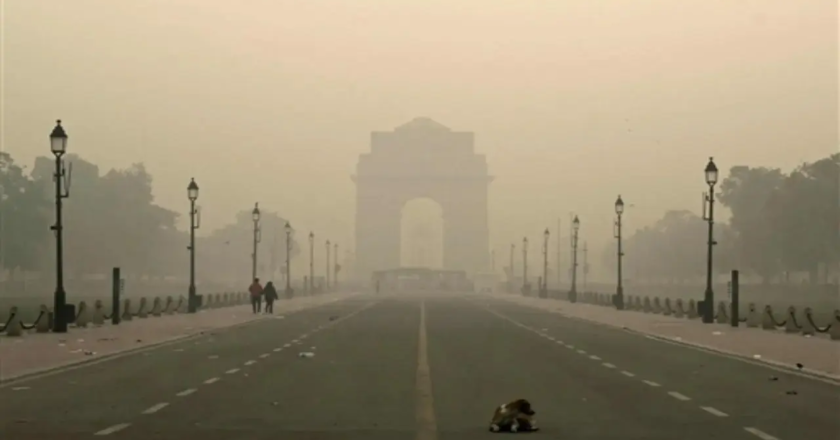
Doctors are witnessing a worrying rise in complaints from pregnant women suffering breathlessness, fatigue, and elevated blood pressure, as the city air pollution continues to remain alarmingly high. Health experts have flagged that the toxic air poses heightened risks to expectant mothers and their babies. They, however, stop short of advising panic-driven moves, like sudden relocation or travel, which, they say, may not be the safest response. Delhi air continues to threaten vulnerable groups such as children, the elderly, and pregnant women. Gynaecologists warn that the fine particulate matter (PM2.5 and PM10) prevalent in the city`s air can pass through the bloodstream and affect the placenta, reducing oxygen supply to the baby, and increasing the risk of pre-term deliveries. Dr Sw...
Study: India has world’s highest prevalence of multidrug-resistant organisms
Health

Study: India has world’s highest prevalence of multidrug-resistant organisms

More than 80 per cent of Indian patients carry multidrug-resistant organisms (MDROs) -- the highest globally, according to an alarming study on Tuesday reflecting the deep antibiotic resistance crisis in the country.  The large-scale international study published in the Lancet eClinical Medicine journal warned that India is at the epicentre of a superbug explosion as several patients in the country were found to carry multiple highly resistant organisms simultaneously. The study released on the first day of the WHO’s World AMR Awareness Week (November 18-24) called for immediate policy changes and a national movement on antibiotic stewardship. The multicentre study analysed over 1,200 patients across India, Italy, the Netherlands, and the US, undergoing a common endoscopic procedure. I...
Study links rise in ultra-processed foods to rising obesity, diabetes in India
Health

Study links rise in ultra-processed foods to rising obesity, diabetes in India

India is undergoing the fastest ultra-processed food (UPF) sales growth, and the resulting dietary transition is surging obesity and diabetes cases, leading to poor health, according to a new three-paper Series published in The Lancet on Wednesday.  UPFs can be defined as food products mostly high in fat, sugar, and/or salt (HFSS), full of unwanted and harmful ingredients such as cosmetic additives like stablisers, emulsifiers, colorants, flavouring substances, etc. These are strongly linked to an increased risk of obesity, type 2 diabetes, cardiovascular diseases, depression, and premature death, among others. The papers, by 43 global authors, showed that retail sales of UPFs in India surged from 0.9 billion in 2006 to nearly USD 38 billion in 2019 -- a forty-fold rise. Retail shop she...